
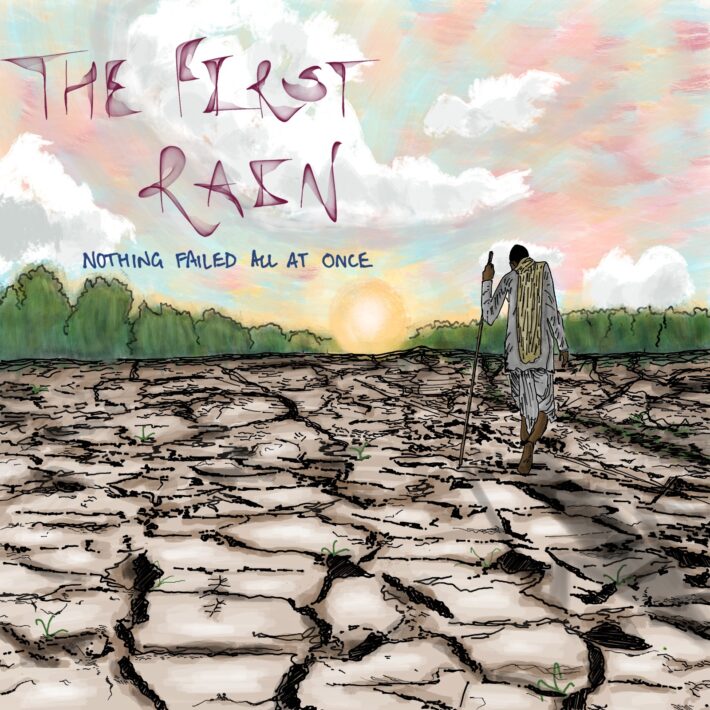
Written By – Varun Jain
Caricature By – Aanchal Chaudhary
Every morning, he checks his phone before he checks the field. He walks to the edge of the road, where sometimes the signal picks up. Today is no different. He walks and looks. As soon as the bars light up, he waits. He waits, and he waits and… nothing. A silent sigh is all he gives. He slips the phone back into his trousers and makes the long walk back.
Last season, the harvest had not gone well. The fields thinned, the crops dropped, and the land dried. The lender filled the gap which the crops left, a simple arrangement: pay the money back when funds are sufficient.
The lender never entered the field. He stood on the edge, his hands behind his back, looking at the land as if measuring it. When the farmer spoke of the insurance, the lender nodded.
“It will come,” said the farmer.
“It always does,” the lender replied.
Officers came and went. Forms were filled, letters were written, and the loss was recorded. The insurance was supposed to pay for what the crop had taken away. But it never came. The season had ended, but the payment did not. The clouds moved forward, but the file did not.
Over the years there had been a little land and a little money put aside through years of careful work. When his crops failed last month the inheritance was the first to go. Most of it went in reassuring the lender, promising the remaining would be paid later. Some went into settling old debts and some into the quiet expenses of running a household.
With zero savings to his name, the farmer had begrudgingly placed his bets on the new season.
With rain comes prosperity. The dreaded summer would be over, and he would fall back into the flow. With nothing left to absorb any delay, he looked forward, because that was all he could do.
The insurance claim had already been filed months ago, when the officers came and measured the loss. Since then, the file had simply been waiting somewhere in the office.
After the first rain, there are three weeks. The land does not wait beyond that.
Every day lost shows up later in thinner rows and weaker crops. The water must flow before the heat returns and takes it back. The seeds aren’t bought yet. The pipes aren’t connected. The money hasn’t come. After the first rain, waiting becomes expensive. Somewhere in the office, the file is still waiting for release. It hasn’t been approved yet. If only Sahib knew how precious this time is, he would sign it right away. Just not today.
He has done everything he was told. He brought the papers, provided the proof, and paid the fees. All the receipts, documents, and photos are neatly folded into a brown-colored folder. The folder has a slight grease stain, the culprit being his seven-year-old daughter.
He learned the dates not from the weather, but from men dressed in shirts and pants. From counters and offices. From voices that told him to come back on Monday, after lunch, next week. The same voices that worked with Sahib.
Sahib arrives at the office at eleven. The peon has already unlocked the door. Waiting on his table is a cup of tea and a pile of files the same height as yesterday. Acknowledging the majestic showpiece, he drops his things onto the wooden table and sits down on his extremely uncomfortable chair. He does not open every file. He can tell by the thickness that not every file is meant to be opened.
Not long after, the farmer arrives. His file is thick. With thoroughly uncombed hair and bare feet, the neat file in his hand seems out of place. He sits patiently waiting for his number to be called.
Work doesn’t begin immediately. First the chair must be adjusted, tea must be sipped and files must be arranged. Each file gets its chance, some are opened, some dismissed.
Eventually, Sahib calls the farmer over and asks him to see his papers again. Sahib flips through them and sees the familiar grease stain. The file seems promising. He knows which documents are common and which ones are usually missing. This one remarkably has most of them.
Just as he is about to inspect the documents, the clock strikes one and the work stops. Lunch isn’t optional. Lunch is fixed. The papers are roughly stuffed back into the file, and the showpiece grows by an inch.
He watches his file join the rest and feels a slight unease. Sahib says that the file is under process. If only he could explain this to his land. He picks up his things and leaves Sahib’s office. Outside, no one seems in a rush. People are sitting in the shade. Some are selling tea. Some are eating fritters. The rain from the morning has dried into small patches. He stands there as if waiting for a change.
It does not.
By the time he reaches home, he has made up his mind. He doesn’t like it, but it’s a viable option. The lender is already there. The farmer explains what he needs. Not much, just enough to buy seeds and begin the season. Once the insurance comes he will repay everything, he reassures him.
The lender takes a long look at the field before nodding. The notes are counted quickly. This process does not take long. The amount is small. The interest is decided quickly. No receipts. No paperwork. Nothing. He keeps the bill for the seeds.
He always keeps the bill.
The seeds go in unevenly, not because he doesn’t know how to do it, but because there aren’t enough of them. He places them carefully, leaving spaces between them for future seeds. He tells himself he’ll buy more when his insurance payment comes.
He doesn’t.
He arranges the tubes himself, causing the work to take longer than it should have. With each bend his back protests. The valves open for shorter intervals this year, making sure to give just enough to prevent the crops from giving in completely. Each day water is rationed with care and spread as thin as it can be.
By the end of the first week, he can already tell the difference. Water slips through the cracks in his once lush fields. The rows grow thinner. The rice rises frail, lacking the confidence it should have had.
One morning he notices damage in his field , termites gathering in small patches, the type that seem easy to ignore and can be cleared out if caught early. They move slowly at first then all at once , multiplying exponentially. By evening they have spread much further than he expected, forcing him to work through the night in order to clear them. Hanging his head in despair he vows that he will not let this season be a failure as well. He goes to the store that morning to enquire about the fertilizer again. The price doesn’t change and neither does his despair…
That afternoon, the lender appears again. He stands by the road watching the fields.
“How do the crops look this year?” he asks.
The farmer shrugs.
Gradually, the gaps begin to widen. He tells himself again it isn’t failure.
It can’t be failure.
It’s adjustment.
The adjustment follows through the house as it did in the field, slowly. That day, his wife’s hands feel lighter, and there is an extra bundle of cash on the table. The children don’t go to school. Their uniforms are neatly folded on their cots. Instead, they help out on the farm, clearing termites, watering crops, feeding livestock. He tells them it’s temporary, that they will go back once things settle, careful to avoid dates, just as he avoids looking at the blank patches in his fields.
The farmer goes back to the office. The rain leaves its smudges on the walls. Sahib arrives exactly at eleven.The day unfolds exactly as before. Sahib works diligently, unhurried, until the clock strikes twelve and the office stops at once. Everyone rushes out except the farmer.
The phone rings. Sahib does not look up at first. After two rings, he lifts it and speaks. His voice lowers, attentive now, edged with urgency. He sets aside the file he was working on and reaches for another from the pile. This one is thinner. The name on the front seems to be enough. Without skimming it, the stamp is pulled closer, the ink pad opened. In a moment, the file is signed, stamped, and placed neatly on top of a pile. That day, only one file movedmoves across the desk.
He goes home and tells his wife that a file was moved today. She listens for a moment without asking questions, nods once, and returns to her work. Their decision to believe is mutual.
He goes back to the store and asks the man about the cost again. Not because he expects it to change, but because there is nothing else to do. The man tells him the same number, patiently. He nods and walks away. He checks his phone more often than he means to. Movement takes time, he tells himself.
The waiting stretches. Day after day, he grows weaker. The field is fed up. The few plants that remain standing are thin and frail, unfit for selling or consumption. He walks the land less often now not out of neglect, but because every compromise has already been made. He goes to the office one last time, not to ask them to hurry, but to ask whether anything is missing. Sahib flips through the file carefully, checking documents he has already checked. The file is complete. There is nothing more to add. When the farmer asks how much longer it will take, Sahib shrugs.
“These things take their own time.”
The lender comes again. He does not step into the field this time, choosing instead to wait by the road. Promises are made. Dates are spoken aloud. The lender leaves uncertain. The farmer remains helpless and ashamed. Half the house is gone. There is nothing left to sell. The children have been out of school for weeks now. He avoids their eyes and spends more time alone, slowly isolating himself from his family.
Even if the money were to come now, he would not survive the season. As the reality settles in, sleep becomes difficult. He dreams of empty plates, of his family waiting. That evening, he does the calculation again. Slowly. Patiently. Thoroughly. Certain this time that if there were a mistake, he would find it.
There isn’t one. The numbers show that there is no room for another season.
After the calculation, the quiet does not lift. It tightens. His thoughts flatten. His mind stays still. He knows what he has to do. There is no hope left to resist and no relief left to wait for. The world narrows as he remains seated for hours, unmoving.
The lender comes one final time. He stands at the edge of the road like he always has, hands behind his back. For a while they talk about normal things: the rain this year, the heat, how the neighbouring villages have a better turnout than them this year.
Then the lender asks quietly, “How much is this land?”
The farmer tells him.
The lender nods and looks across the field again, measuring every grain.
“And the well?”
“It belongs to the land.”
The lender nods.
No words of repayment are spoken. No promises are made. He wraps his shawl and walks away.
The farmer can only watch.
He remembers his father. How his father used to walk the same path he did before dawn, examining the soil with the same attention. Now seasons move differently. The papers travel slower than the clouds. The rain that once promised relief now shows how late everything else has become.
Before dawn, he walks into the field. The toolshed is unlocked. He takes the rope from its hook and walks toward the old tree at the edge of the land. By then, the calculation has already been done too many times, and every answer has led him here. The silence hums in his ears as he ties the rope with hands that no longer tremble. All options have been exhausted.
The fields look the same as they did the night before. The cracks have grown wider, the rows stretch across frail and thin. Somewhere far away a dog barks, and then there is only silence. The land has known him for years, far before any lenders, before any forms and files, before numbers decided whether it was worth farming at all.
He is found in time.
The money arrives uneventfully. A message on his phone shows the exact amount, the correct scheme name, and the right reference number. He reads it twice, expecting it to disappear. At the bank, the clerk deposits it into his account and hands him the receipt. No one asks what he will use it for. By then, there is nothing it can fix. Replanting would mean destroying what little has survived. The field has already decided what it will allow. The money arrives intact, precise, and completely useless.
When he goes to the office the next day, Sahib goes through the file once more. He points to the line where the release is recorded and says, “You received it.”
The farmer nods.
The case is rendered a success. The payment has been delivered.
In offices it is just another file waiting to be cleared, in reports its just another incident that will join this season’s count, in conversations its just another season people will shake their heads about before moving on. If the land kept a record it would know how its happened before. Across fields that cracked the same way, across homes that fell quietly. At the end nothing remains except that number. The folded uniforms,the sleepless nights , the calculations under the dim light, all of it leads up to that one number that sits cleanly in some newspaper at the end of the year.
By the time everything was approved, there was nothing left that approval could change. The work had already been done by waiting, by weather, by time moving at its own pace.
The rain was never late.